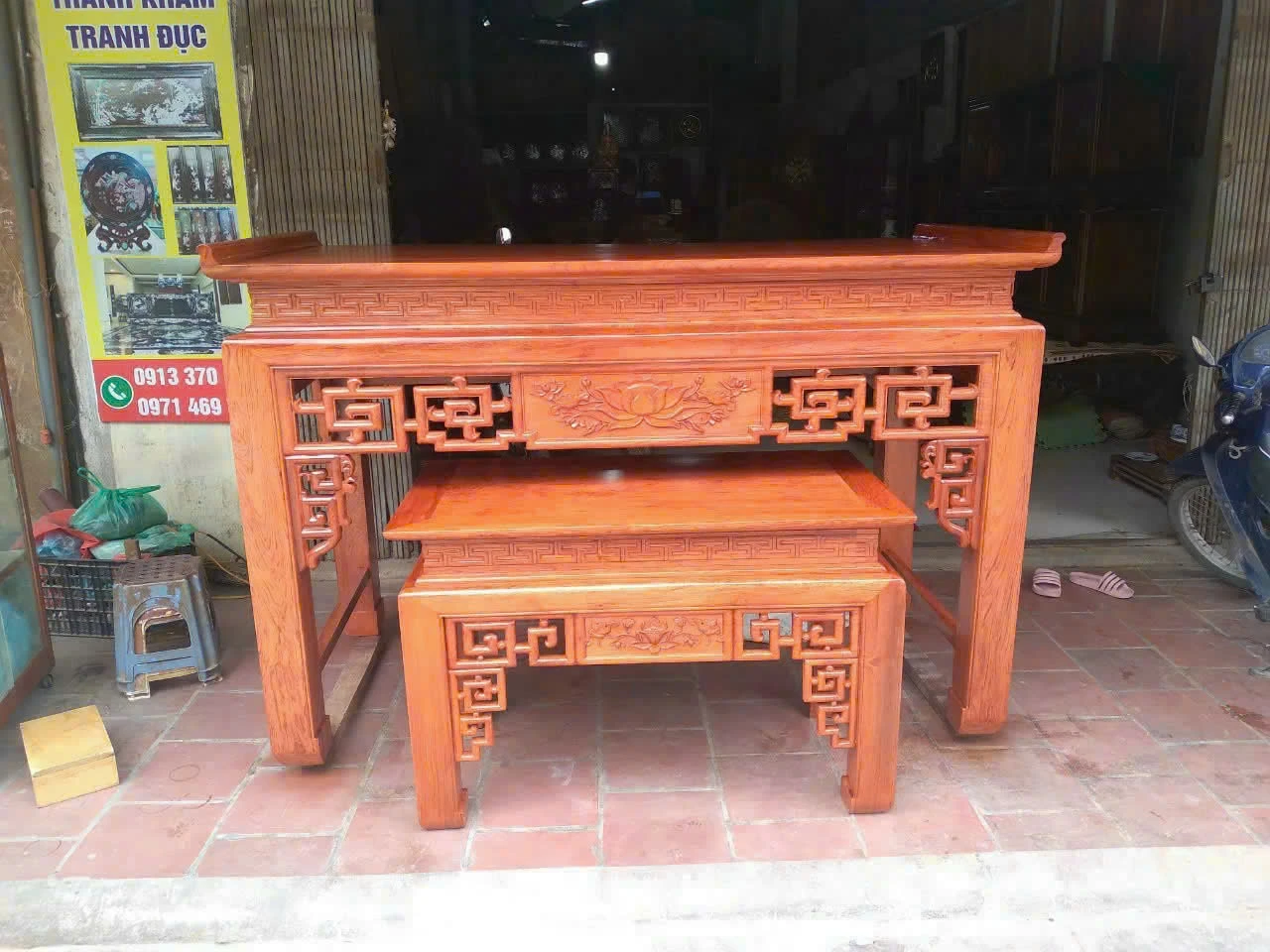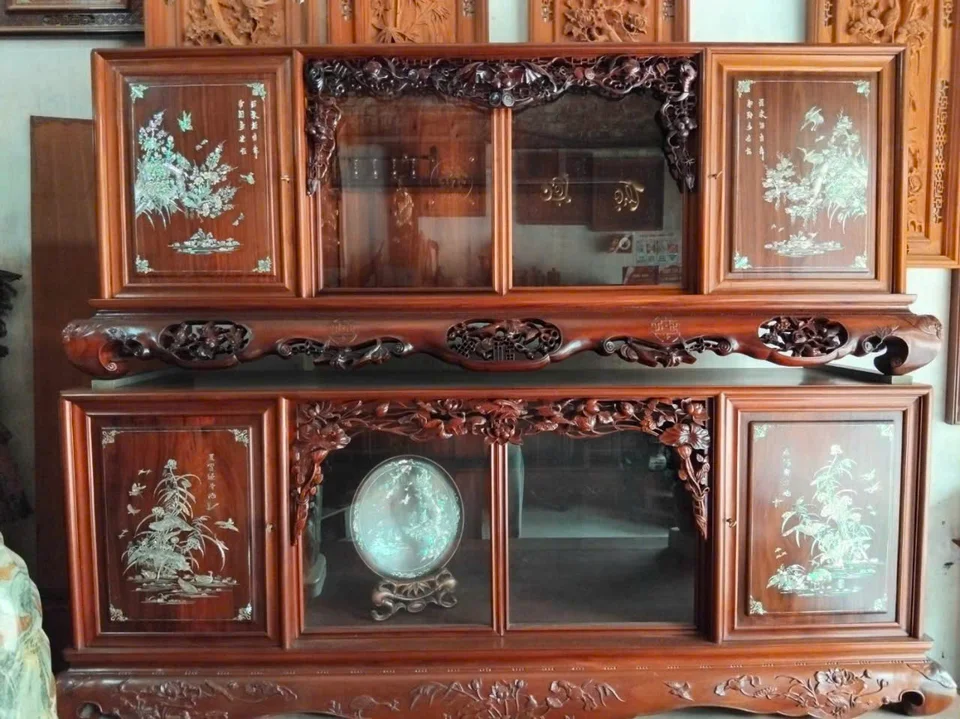
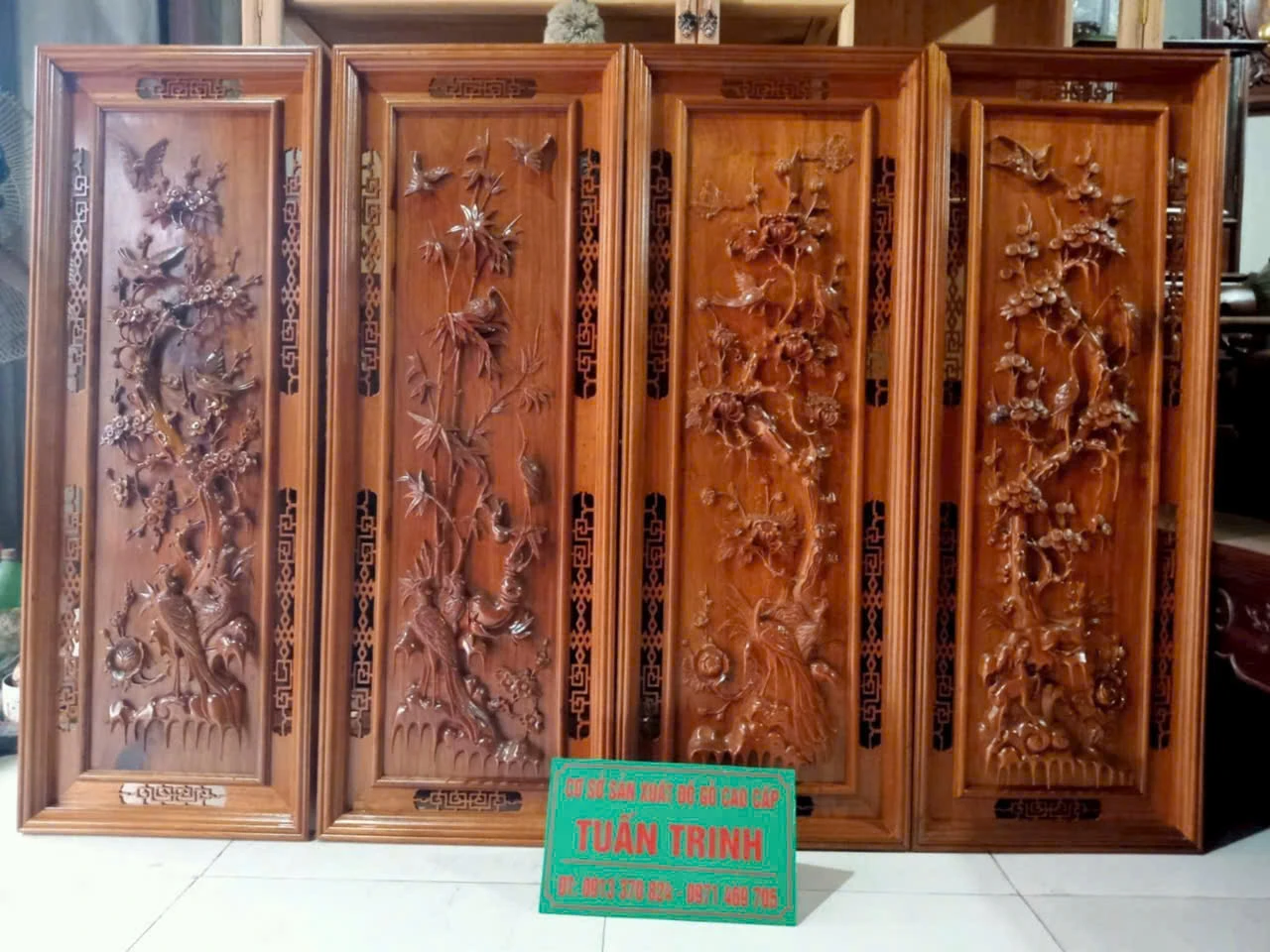
Gụ ta, gụ Lào and hương Lào are familiar commercial descriptions in conversations at Tuấn Trinh. Forestry references offer another way to explore them: how trees are named, why timber responds to its environment and what to ask about an individual piece.
Tree names in forestry references
A VAFS study records gụ lau as Sindora tonkinensis, a species name accepted by Kew. VAFS uses Pterocarpus macrocarpus for giáng hương. Scientific names help readers identify which tree a reference discusses.
The commercial descriptions gụ ta, gụ Lào and hương Lào still need to be related to the actual material. The botanical names here are documented examples, not identifications of the species or source of timber in the family’s reference pieces.
Winged fruit within a scientific name
Singapore’s NParks explains Pterocarpus through the Greek roots for wing and fruit, while macrocarpus means large-fruited. A feature of the fruit is preserved in the tree’s name, a useful detail to remember when reading about giáng hương.
Wood and the room’s humidity
The USDA Wood Handbook describes wood as a material that exchanges moisture with its surroundings. Movement differs by grain direction; coatings can slow moisture exchange but cannot stop it completely. Timber choice therefore sits alongside component design and the conditions of use.
For a custom piece, describe whether the room regularly uses air conditioning and whether the position is near a sunny window or damp wall. For a cabinet, discuss the frame, doors, shelves and back separately. A clear component list makes two proposals easier to compare than one general timber name.
Caring for the surface in use
The Canadian Conservation Institute advises avoiding direct sun, nearby heat and standing water, and notes that polishes can leave deposits or affect finishes. Cleaning guidance should suit the actual surface. Ask the maker about an unfamiliar finish before choosing oils, waxes or cleaners.
Keep the reference name, agreed component materials and care guidance. Those details stay with the piece beyond the first conversation, so any later discussion can refer to the same cabinet, seating set or altar table.
Further reading
Original sources used to prepare the guidance in this article.
- VAFS — Nghiên cứu kỹ thuật nhân giống hữu tính cây Gụ lau (2024) ↗
- Royal Botanic Gardens, Kew — Sindora tonkinensis ↗
- VAFS — Kết quả nghiên cứu nhân giống vô tính bằng hom loài Giáng hương ↗
- Singapore NParks — Pterocarpus macrocarpus: etymology ↗
- USDA Forest Products Laboratory — Wood Handbook, Chapter 4 (2021) ↗
- Canadian Conservation Institute — Basic care: Furniture and objects made of wood ↗
You can send the article link with a reference photograph when speaking with the family.
How custom furniture orders work