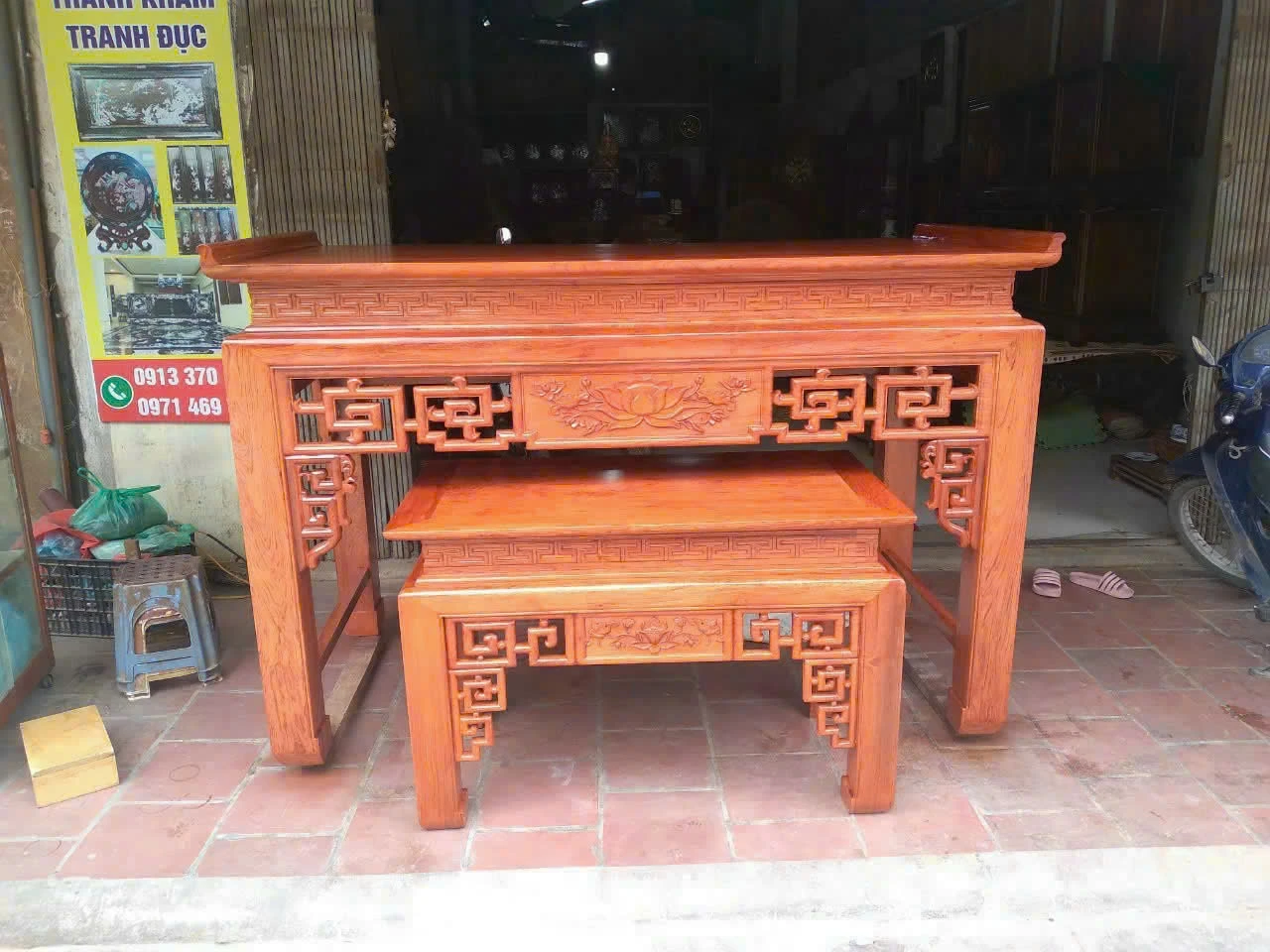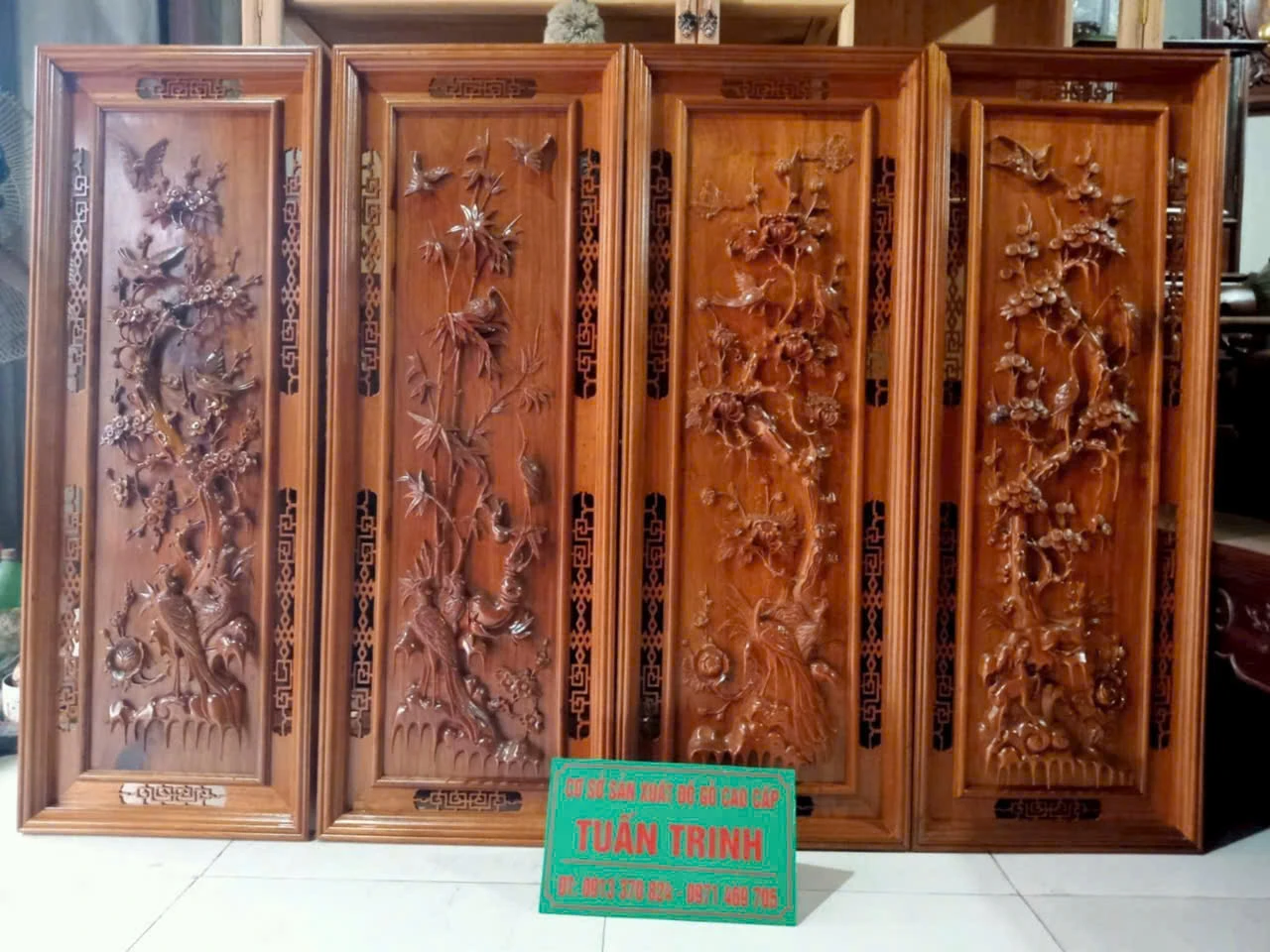
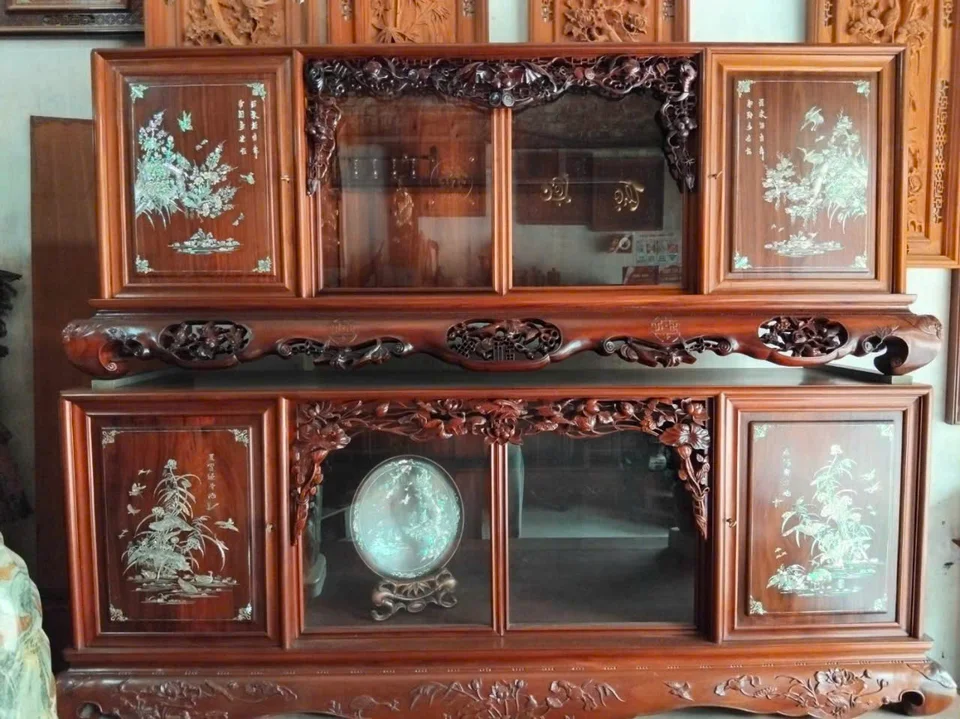
A tea cabinet rewards two distances of viewing: from across the room, its form and divisions; up close, carving and inlaid areas on the timber surface. Its shape and details open a conversation about regional traditions and decorative work.
One name, several cabinet forms
In its account of Kim Bồng woodwork, the Hội An heritage centre describes a low, long tea cabinet, also called a buffet, divided into central and side sections. It records differences between Kim Bồng cabinet feet and northern placement on a wooden platform.
Look at the space beneath the cabinet and the rhythm of its front. A low horizontal form reads differently from a raised central section, while closed doors and display compartments contribute to that rhythm. These are useful features to point out in a reference image.
Carving shapes the form; inlay fits the detail
The Vietnam National Museum of History describes shell inlay through cutting motifs, recessing the ground and fitting the pieces into it. Each outline involves both the shape of the fragment and its fitted edge. The museum also presents the Chuyên Mỹ craft-origin account as a transmitted legend.
For carving, look at the raised form and the ground around a motif. For inlay, follow fitted edges, changes of direction and connections between pieces. A cabinet may first attract through its overall shape, then hold the eye on a small area of a door.
A historical reference in a museum collection
The museum’s early-twentieth-century Nguyễn-period inlaid-wood collection includes a cabinet decorated on its front and sides with auspicious creatures, seasonal plants, stories and landscapes. Decoration across several surfaces invites viewers to walk around a piece, read individual panels and return to the whole.
A dated museum object and a present-day family reference cabinet have separate histories. What we can bring to viewing a design is attention to form, divisions and decorative details. Send the exact carved or inlaid area you like as a starting point for discussion.
Further reading
Original sources used to prepare the guidance in this article.
You can send the article link with a reference photograph when speaking with the family.
How custom furniture orders work