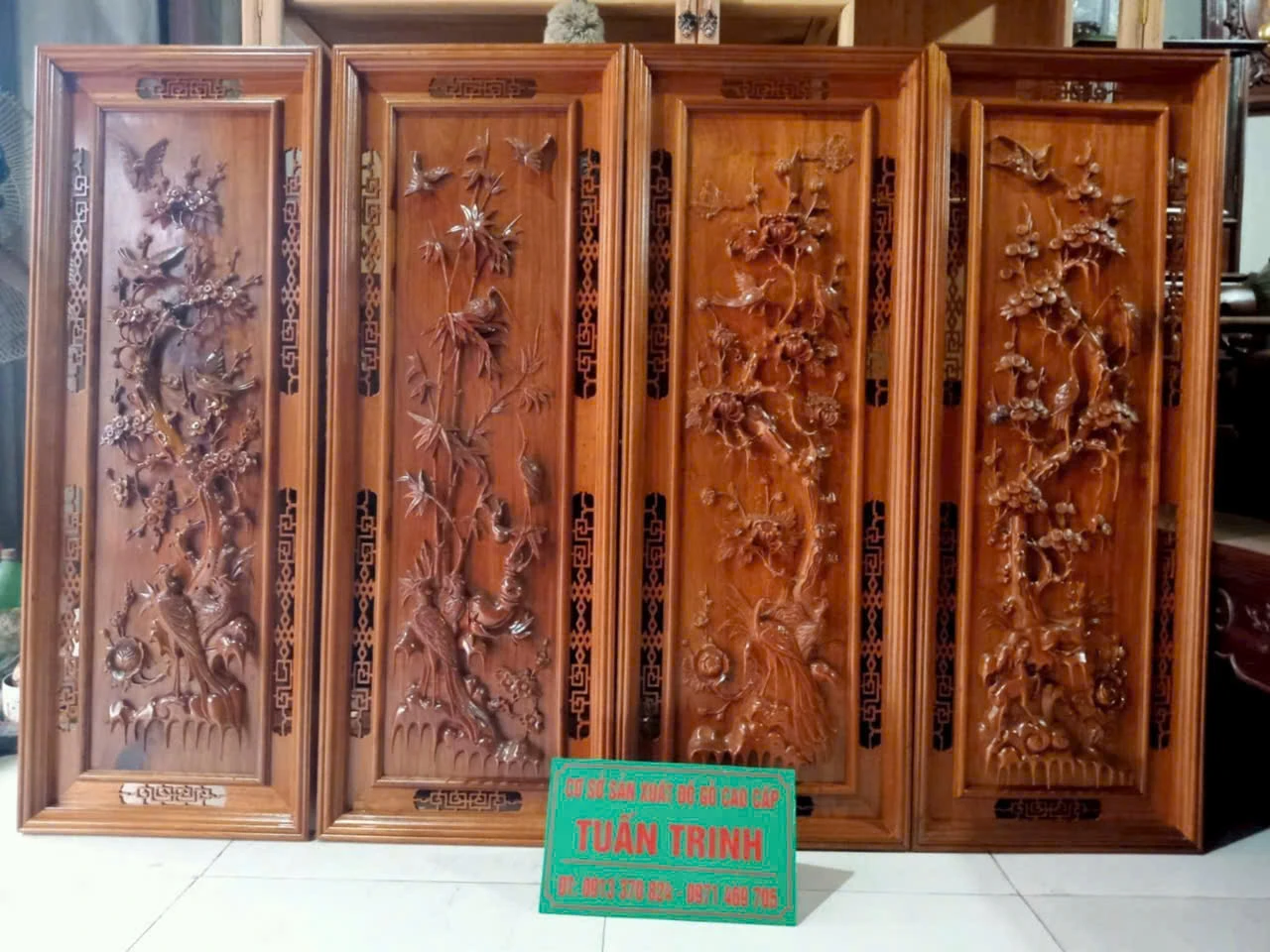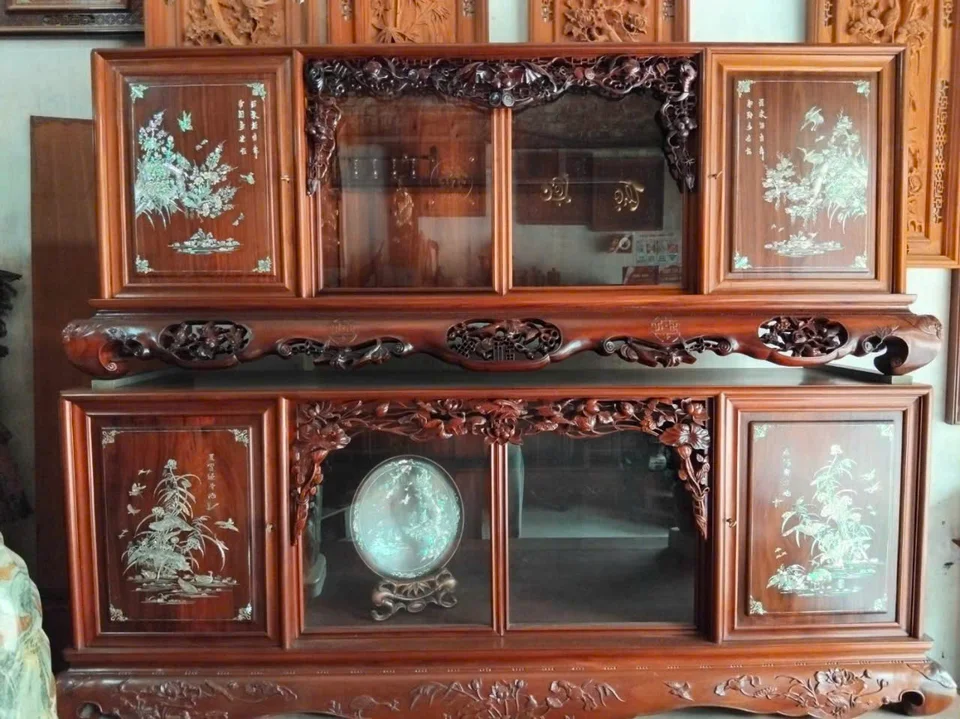
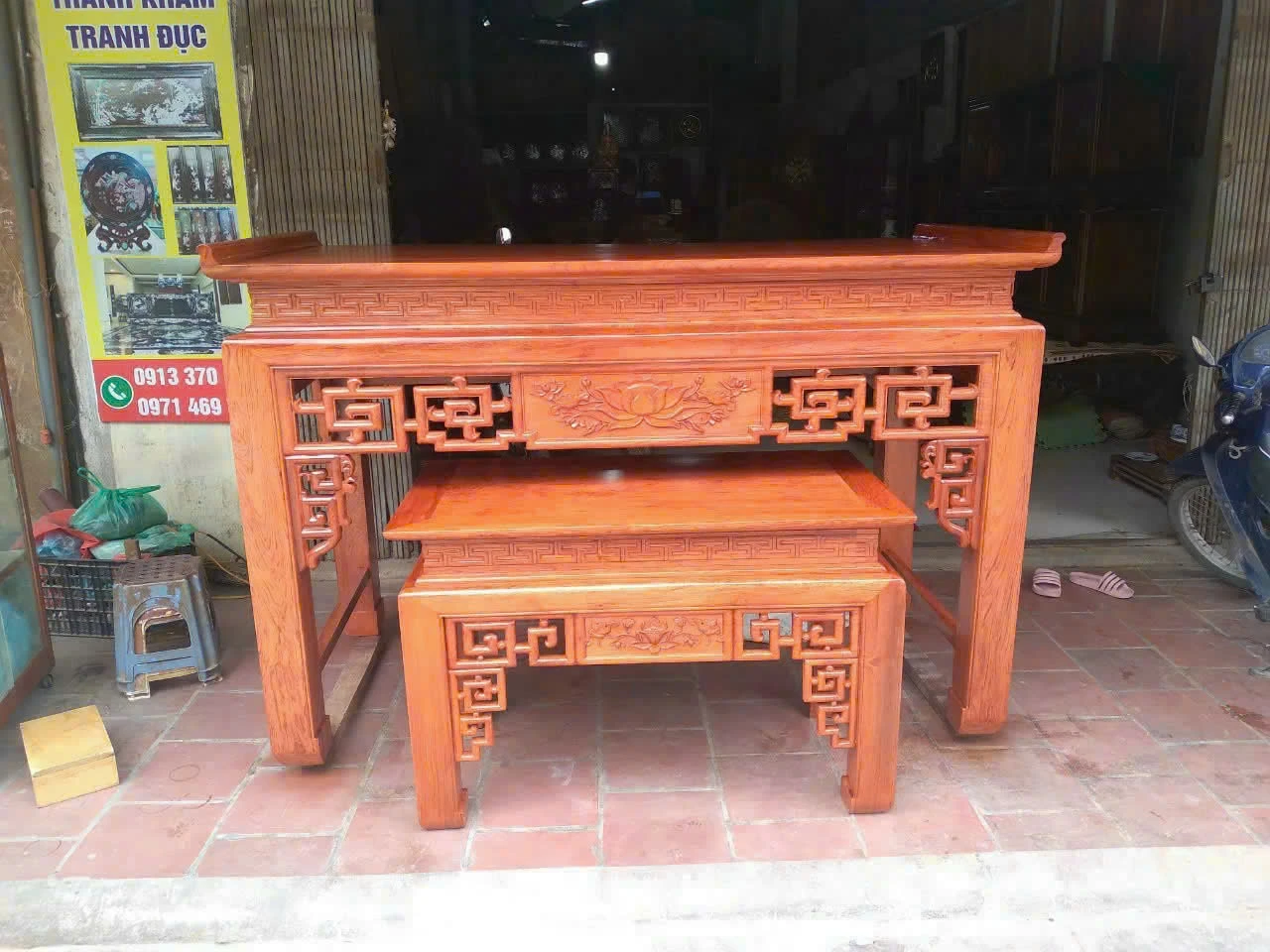
On worship furniture, carving can lead the eye from a small motif into the frame and legs. One way to explore án gian is through the layers of carving, where timber forms meet areas of light and shadow.
Openwork carving in Nguyễn-period worship furniture
A Vietnam National Museum of History study of Nguyễn-period lacquered and gilded worship furniture includes án gian among objects with openwork carving. Layered carving creates depth and contrasts of light and shadow that can be viewed from several angles.
The front view shows the composition, while an oblique angle reveals projections and openings. Choose one small area, follow its lines to the frame and legs, then step back to see the whole piece.
From motif to composition
When viewing worship furniture, consider how the top, decorated body and legs relate. You may be drawn to the overall form or a single carved detail. Keeping the exact view makes the discussion specific: what appeals to you, which lines to retain and what to change for the intended space.
For inscriptions and narrative scenes, request images clear enough to check the content before agreement. The table form, legs and amount of decoration can be discussed separately for the chosen design and family space.
Exploring a name through documented objects
Nguyễn-period references give us a historical point from which to explore worship furniture, without establishing the origin of the name án gian or the first appearance of the type. Keep an object’s own record with its story: its catalogue name, recorded date and visible details.
For new work, bring reference images and photographs of the intended position. If the commission includes a table, panels and rear decoration, list those elements separately so their timber specification and arrangement can be discussed clearly.
Further reading
Original sources used to prepare the guidance in this article.
You can send the article link with a reference photograph when speaking with the family.
How custom furniture orders work